If you look after a family member, friend or neighbour who could not manage without your support, Park and Thorntree Surgery want to make sure you are recognised and supported as an unpaid carer.
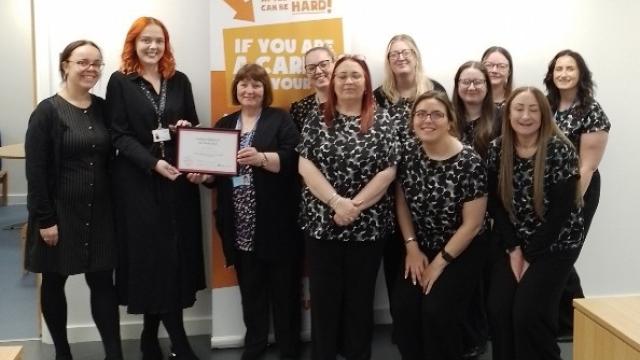
Park and Thorntree Surgery have achieved Carer Friendly GP Practice Status, meaning there are now 13 GP surgeries across South Tees working to better identify and support unpaid carers.
So far, the surgeries have identified and registered 193 unpaid carers, with the number continuing to grow each month. They have been actively reaching out to people who may not realise they are carers or that support is available to them.
This has included sending text messages to patients, displaying posters and leaflets in the surgeries, and making carer registration forms available in reception areas and consulting rooms.
The surgeries have also developed a Carer Information Pack with advice, information and details of local support available for unpaid carers.
Staff and clinicians are now more aware of the needs of carers, helping more people feel comfortable identifying themselves as unpaid carers during or after appointments. Having carer registration forms available in consulting rooms has also made it easier for carers to ask for support.
The surgeries are also planning to offer unpaid carers an annual health and wellbeing review with a GP. The reviews would help identify stress, depression, burnout and physical health problems early, helping carers to look after their own health as well as the person they care for.
Amy Holt, Admin and Operations Manager at Park and Thorntree Surgeries, said:
“Following completion of Carer Friendly Training and Accreditation, our GP practice has strengthened its commitment to supporting unpaid carers within our community. The training has enabled our team to better recognise and identify hidden carers, ensuring they are acknowledged and offered appropriate information, signposting, and additional support. This has helped us create a more carer-aware practice environment where unpaid carers feel recognised, valued, and supported in their caring role.”