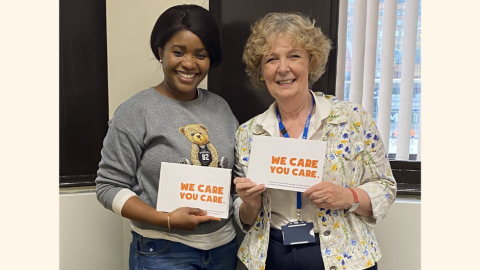

Middlesbrough Council employs around 3,500 staff and recognises that many employees balance their work responsibilities with caring for family members, elderly or disabled friends, children with additional needs or partners with long-term health conditions.
Saadia Azam, HR Lead for Equality, Diversity & Inclusion and Well-being, explains:
“The council understands that supporting working carers is important for creating a healthier and more inclusive workforce. When employees feel supported to manage both their job and their caring role, it helps improve wellbeing, morale and staff retention.”
Support available for working carers
Middlesbrough Council has several policies and initiatives to help employees who have caring responsibilities, including:
- Work Life Balance Policy
- Flexible working options
- A Carers Network where staff can connect and share experiences
- A Carers Passport, which records agreed adjustments and support
- Carers leave of up to 5 days per annum for employees who identify as a Carer. Carer’s leave can be taken in hourly increments, half day blocks or full days and is designed to support carer’s directly in their caring role.
- Discretionary leave of up to 5 days per annum to deal with an unanticipated problem in the home or within the family unit.
Employees are encouraged to identify themselves as carers so they can access the support available and have open conversations with their manager.
Raising awareness
Information about support for carers is regularly shared across the organisation through the staff intranet, internal emails, staff networks, staff briefings and the council’s internal Facebook group. This helps ensure employees know what support is available and how to access it.
A working carer’s experience
An employee who cares for their elderly mother talks about how support from the council has made a difference:
“I am an Admin Assistant, I also care for my elderly mother who has mobility problems. At times it was difficult to balance my job with my caring responsibilities, especially when I needed to take my mother to appointments.
“I spoke with my manager about my situation, who was very understanding. We agreed on flexible working hours and occasional time off. I completed the Carers Passport, which helped me keep a record of the adjustments agreed and of any additional support I needed, both currently and in the future. It was a very helpful document, which helped me open up to my manager about my personal circumstances.
“Having a supportive workplace has made a big difference to me. I feel less stressed knowing that my employer understands my situation and is willing to help. It has allowed me to manage both my job and my caring role much better. Because I feel supported and valued, I can stay focused at work and remain committed to my job.”
Advice for other organisations
We asked Saadia what advice she would you give to other organisations looking to become more carer-friendly?
“It starts with listening to your staff. When staff feel supported to balance work and caring responsibilities, everyone benefits, morale improves, retention strengthens, and you build a culture where people genuinely feel valued.”
Some simple steps organisations can take include:
- Creating a staff network for carers where staff can talk about any barriers they are experiencing in the workplace in a safe space
- Equipping managers with guidance on flexible working. Adjusting workloads and supporting wellbeing
- Promoting policies through inductions and internal communications
- Raising awareness during Carers Week or other internal campaigns
- Normalising conversations about caring responsibilities
- Making support visible and easy to find
- Encouraging leaders to champion and role model support for carers.
- Linking with organisations such as Carers UK and local carer support services: Carers Together, Teesside Mind, The Junction Foundation and We Care You Care
If you are a working carer
If you care for a family member or friend while working, it may help to let your employer know about your situation. Many organisations have policies or support available, but they may not realise you are a carer unless you tell them.
You could start by:
- Having a conversation with your manager or HR team
- Asking about flexible working options
- Checking whether your workplace has carer policies or support networks
- Recording agreed adjustments so everyone is clear about the support in place
Being open about your caring role can help your employer understand your situation and work with you to find ways to support both your wellbeing and your work.
Find out more here Working Carers | We Care You Care