Census 2021 data for England and Wales shows there are around 5.8 million unpaid carers across the UK, with women making up about 59% and men 41%. This means more than two million men are balancing caring responsibilities alongside work, family life, and their own health. Despite this, men are less likely to receive help and more likely to cope alone.
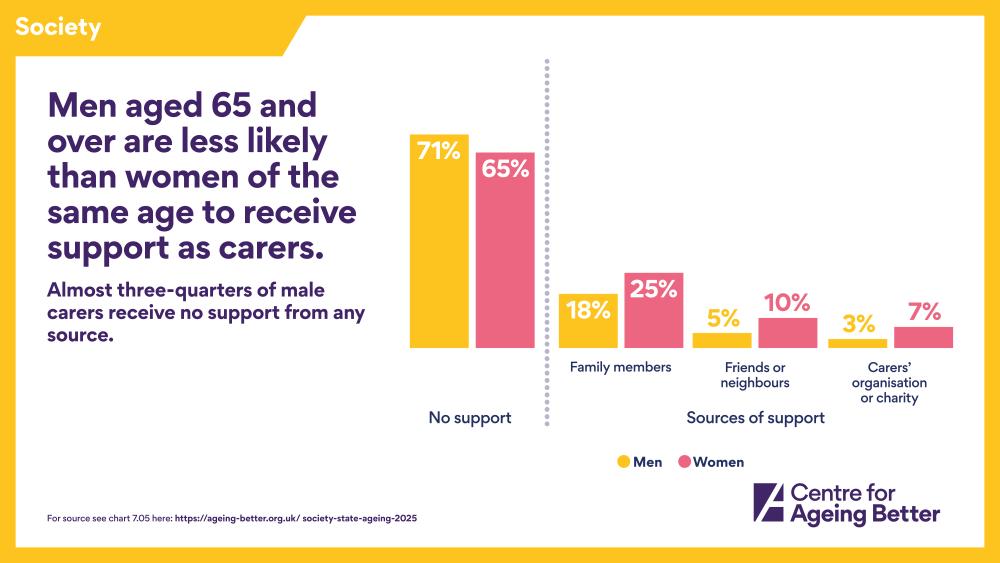
Research from the Centre for Ageing Better shows that men aged 65 and over are less likely than women to receive support as carers, and almost three quarters of male carers receive no support from any source at all.
Looking after a family member, partner or friend who relies on you for care and support can involve practical tasks such as cooking, cleaning, managing medications, personal care, as well as emotional support, and navigating health and social care systems. For some men, these responsibilities increase gradually, until caring becomes a central part of daily life.
The reality of caring; for male carers
Census data also shows that men are providing high levels of care. Among male carers, those aged 85–89 are most likely to be providing over 50 hours of unpaid care per week (7.4%), demonstrating how intensive caring can become. While this is most visible at older ages, men of all ages can find themselves delivering demanding, round-the-clock care with little preparation or support.
Loneliness and isolation
The emotional impact of caring is significant. According to Carers UK’s State of Caring report 2025, 43% of carers say they feel lonely. Many carers describe feeling isolated because friends and family do not fully understand their caring role or the toll it takes on their lives. For men, this isn’t always about feeling “lonely” - it’s often about losing routine, purpose, or the outlets that normally help them switch off or reset .
As caring responsibilities grow or become more complex, many carers find they have to:
• Give up hobbies
• Reduce social activities
• Become less physically active
• Put their own health and wellbeing last
• Leave paid employment or go part-time
Over time, this can contribute to loneliness, stress, anxiety, or depression. For men, these effects can be intensified by social expectations around self-reliance and “coping”, which can discourage them from talking openly about how they are feeling or asking for help.
At the same time, the things that are known to protect wellbeing like staying socially connected, being active, maintaining interests, and eating well often become the hardest to do when caring for someone. Many carers struggle to take breaks, or feel guilty about stepping away, even if it’s just for a short period of time.
Why peer support matters for men
Support does not always need to be clinical or formal. Peer support and social connection can make a real difference, offering men a chance to share experiences, swap ideas, and hear from others in similar situations.
Men-only peer spaces can be particularly powerful. They offer:
• A safe, non-judgemental environment
• A chance to chat or just spend time alongside others
• A short break from caring responsibilities
• A reminder that you are not alone
For some men, simply being around others with similar responsibilities helps ease the pressure, even without deep conversation.

Local support for men in South Tees
Across South Tees, there are a range of men’s groups and peer-support spaces offering social connection, and practical support. These include:
Men’s Shed Redcar
A welcoming space for men to meet, work on projects, and connect
The Shed, 10 Queen Street, Redcar TS10 1DY
Monday, Tuesday, Wednesday and Thursday 9am - 2pm.
Tel: 07526994468
Email: theshed@footprintsinthecommunity.co.uk
Walk N Talk Redcar
Weekly walks
A mental health awareness and support group focusing on helping people with mental health issues in a non-judgmental and confidential environment. https://www.facebook.com/groups/414365537487129/
Andy’s Man Club
Peer-to-peer support group for men aged 18+
Every Monday 7pm except bank holidays.
Middlesbrough Town Hall, Old Fire Station, Albert Road, Middlesbrough, TS1 2QJ
Tel: info@andysmanclub.co.uk
Facebook: https://www.facebook.com/p/Andys-Man-Club-Middlesbrough-100071507972342/?locale=en_GB
Every Man Can CIC
Mental health support, training, and wellbeing initiatives
Tel: 07386 632578
Email: everymancancic@gmail.com
@EveryManCan | Instagram, Facebook | Linktree
Link Charitable Trust – Men’s Space
A relaxed, men-led social group
Tuesdays at The Palace Hub, Redcar, TS10 3AE
Tel: 01642 989198.
Email: office@linkct.org.uk
Website: https://thelinkct.org.uk/for-adults/mensspace/
Infant Hercules and Pals
Teesside's choir for men who like pubs and singing songs
Email: mike.mcgrother@gmail.com
Facebook: https://www.facebook.com/Infantherculeschoir/
Teesside Mind – Men’s Coffee and a Chat
Friendly social meet-up
Community Room, Redcar Morrisons, Lord Street, Redcar, TS10 3ER
Every Wednesday 5pm-7pm
Tel: 01642 257020
Email: mhp@teessidemind.org.uk
These spaces are not about fixing problems or forcing conversations. They are about connection, understanding, and not having to carry everything alone.
You are not alone
Caring for someone can be rewarding, but it can also be demanding, tiring, and relentless at times. Feeling overwhelmed, isolated, or exhausted does not mean you are failing. It means you’re human, and you’re carrying a lot.
Support exists, and reaching out whether to a peer group, a local organisation, or someone you trust can make a real difference. Sometimes, a conversation today can help make tomorrow feel more manageable.